
About ABC Live
ABC Live is an independent, research-driven journalism platform focused on geopolitics, law, economics, and public policy. It consistently publishes data-backed explainers that connect domestic events with wider global power shifts.
New Deli (ABC Live): For more than a decade, Venezuela remained caught between humanitarian collapse, criminalised governance, and rising great-power rivalry. During this period, Washington relied on sanctions, indictments, diplomatic isolation, and regional pressure. At the same time, it deliberately avoided the one step that would break post–Cold War restraint in the Western Hemisphere: direct action against a sitting government.
However, that restraint did not last.
Importantly, the U.S. decision to act did not follow a single dramatic trigger. Instead, it grew from a steady accumulation of evidence. Over time, sanctions lost force. Meanwhile, mass migration strained neighbouring states. At the same time, organised crime merged with state power. Simultaneously, outside powers expanded their role inside what Washington still treats as its core security zone.
As a result, U.S. policymakers reached a blunt conclusion: waiting longer now carried more risk than acting. Put simply, Venezuela stopped being a contained dictatorship. Rather, it became a structural threat to hemispheric stability. Therefore, Washington shifted from containment to enforcement.
This explainer, therefore, explains why that shift became unavoidable.
Why Sanctions Gradually Lost Leverage
Initially, U.S. and allied sanctions limited Venezuela’s access to global finance, energy markets, and elite mobility. In theory, they aimed to raise pressure while keeping diplomatic exits open.
Over time, however, adaptation moved faster than pressure.
For instance, oil exports shifted through shadow traders. Likewise, gold, cash, and crypto bypassed banks. Meanwhile, political elites absorbed shocks faster than ordinary citizens. Because of this, sanctions stopped creating leverage. Instead, they froze the crisis—deep economic pain without political change.
Crucially, this freeze benefited those who controlled illegal income. As a consequence, sanctions became a background condition rather than an active tool.
Data Table 1: Venezuela’s Oil Output Decline
| Year | Oil Production (mb/d) | What Changed |
|---|---|---|
| 2013 | ~2.7 | Pre-crisis baseline |
| 2017 | ~1.9 | PDVSA decay, misrule |
| 2019 | ~0.9 | US oil sanctions |
| 2021 | ~0.6 | Shadow exports rise |
| 2023 | ~0.8 | Low-level recovery |
ABC Live Interpretation:
Notably, the sharp fall came before sanctions. After sanctions, output did not collapse to zero. Instead, it stabilised at a low level. This, in turn, shows adjustment rather than surrender. In short, sanctions reshaped behaviour but failed to force change.
How the State Turned Criminal
Venezuela’s crisis goes beyond authoritarian politics. Gradually, governance itself became criminal.
For example, drug routes, illegal mining, and smuggling blended into state authority. At the same time, security forces fractured into rival armed groups. Meanwhile, courts lost real power. Consequently, the system stopped acting in a normal state.
At that stage, diplomacy hit a hard limit. Simply put, you cannot bargain with a system that earns from chaos.
Data Table 2: Indicators of Criminalised Governance
| Area | Observable Pattern |
|---|---|
| Drugs | Transit hub for cocaine |
| Mining | Armed control of gold zones |
| Security | Parallel loyalist forces |
| Justice | Near-total impunity |
ABC Live Interpretation:
Once again, when crime replaces taxes and trust, negotiation fails by design. As a result, disorder becomes the business model.
How Migration Turned Into a Regional Shock
Economic collapse pushed millions to leave Venezuela. At first, neighbours treated this as a humanitarian issue. Over time, however, it evolved into a regional stress test.
Data Table 3: Venezuelan Displacement (UN Estimates)
| Year | People Displaced (million) |
|---|---|
| 2016 | ~1.3 |
| 2019 | ~4.5 |
| 2021 | ~6.0 |
| 2024 | ~7.7 |
ABC Live Interpretation:
At this scale, politics across Latin America changed. For instance, public services are strained. At the same time, borders tightened. Consequently, elections hardened. Because of this, Washington could no longer treat Venezuela as an internal collapse.
Why External Powers Crossed a Strategic Line
As the Venezuelan state weakened, others moved in.
Specifically, China expanded energy and debt ties. Meanwhile, Russia deepened security links. Additionally, Iran assisted with sanctions workarounds. Taken together, these links turned Venezuela into a platform state for rival powers.
From Washington’s perspective, this crossed a clear strategic line. At that point, the issue was no longer democracy. Instead, it became about deterrence inside the Western Hemisphere.
Data Table 4: External Footprint in Venezuela
| Actor | Role | Strategic Effect |
|---|---|---|
| China | Loans, oil offtake | Long-term leverage |
| Russia | Security support | Political cover |
| Iran | Technical help | Sanctions bypass |
ABC Live Interpretation:
Individually, each tie was manageable. Collectively, however, they changed the balance.
Why Diplomacy Could Not Deliver an Exit
Over several years, talks attempted to stabilise Venezuela. Yet, each failed for the same reason: non-compliance without cost.
| Track | Outcome |
|---|---|
| Elections | Delayed or hollow |
| Sanctions relief | No reform |
| Mediation | Time-buying |
As delays grew, decay deepened. Therefore, diplomacy became symbolic rather than effective.
Why Direct Action Became the “Least Bad” Choice
By this stage, the choice narrowed sharply:
-
Either allow a criminalised state to destabilise the region indefinitely, or
-
Alternatively, accept risk to disrupt crime–state fusion and restore red lines
Within this framework, direct action was not about ideology. Rather, it was enforcement.
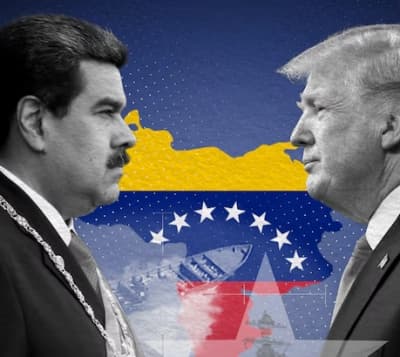
The move against Nicolás Maduro, therefore, marked a break. At that point, Venezuela was no longer just a domestic crisis. Instead, it had become a systemic threat.
What the US Still Risks
| Risk | Why It Matters |
|---|---|
| Escalation | Rival probing |
| Humanitarian strain | Short-term shocks |
| Precedent | Global South unease |
Even so, Washington judged continued drift as the greater danger.
ABC Live Note
This explainer focuses on structural drivers rather than tactical details. Accordingly, ABC Live does not claim access to classified intelligence and does not endorse any government’s use of force. Instead, we aim to explain why policy thresholds shift, how risk calculations evolve, and what such moves mean for regional stability.
Therefore, ABC Live welcomes factual corrections, right-of-reply statements, and additional verifiable data at research@abclive.in.
Bottom Line
Ultimately, the United States did not act because of one event. Rather, it acted after years of layered failure—weak sanctions, criminal rule, mass migration, and rival power entry.
When containment stopped working, enforcement replaced restraint. In the end, acting appeared less risky than waiting.
ABC Live Internal Links (Context & Background)
-
ABC Live Explainer: The Future of Geopolitics Under Trump 2.0
https://abclive.in/2025/11/18/future-of-geopolitics-trump-2-0/
Verified Sources (Exact Hyperlinks)
-
UNHCR – Venezuela Situation:
https://www.unhcr.org/emergencies/venezuela-situation -
IEA – Venezuela Oil Production Data:
https://www.iea.org/countries/venezuela -
U.S. Treasury – Venezuela Sanctions Program:
https://home.treasury.gov/policy-issues/financial-sanctions/sanctions-programs-and-country-information/venezuela-related-sanctions -
Congressional Research Service – Venezuela: Political and Economic Crisis:
https://crsreports.congress.gov/product/pdf/IF/IF10230 -
UNODC – Transnational Organised Crime in Latin America:
https://www.unodc.org/unodc/en/data-and-analysis/tocta.html
How ABC Live Verified This Report
ABC Live relied exclusively on open-source, verifiable material: UN displacement data, IEA oil statistics, U.S. Treasury sanctions records, CRS analyses, and UNODC crime assessments. No classified or leaked material was used.